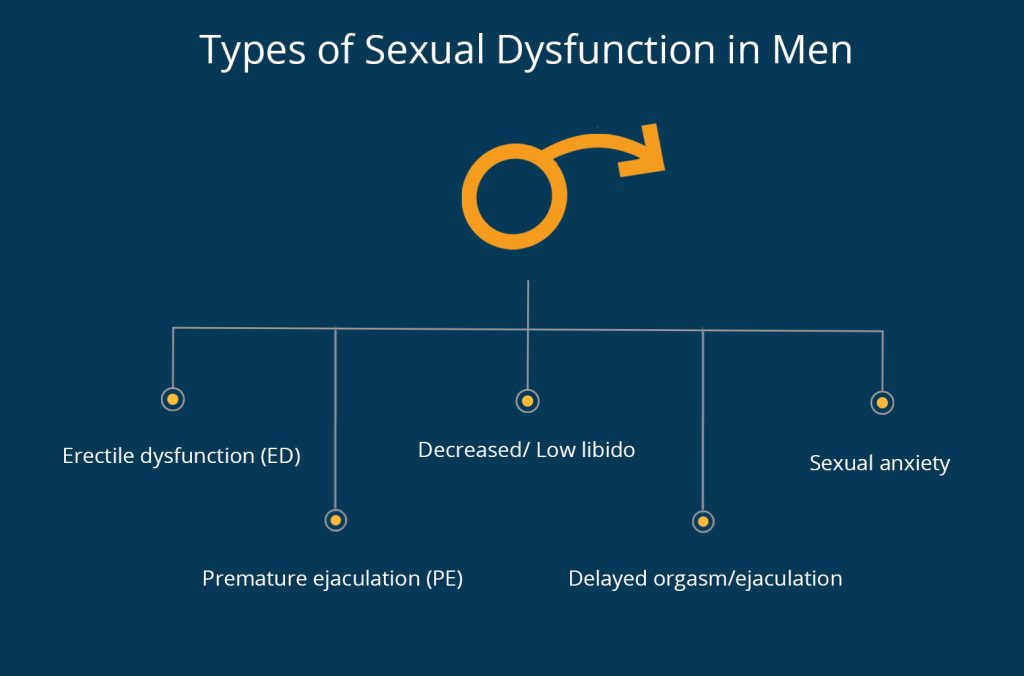
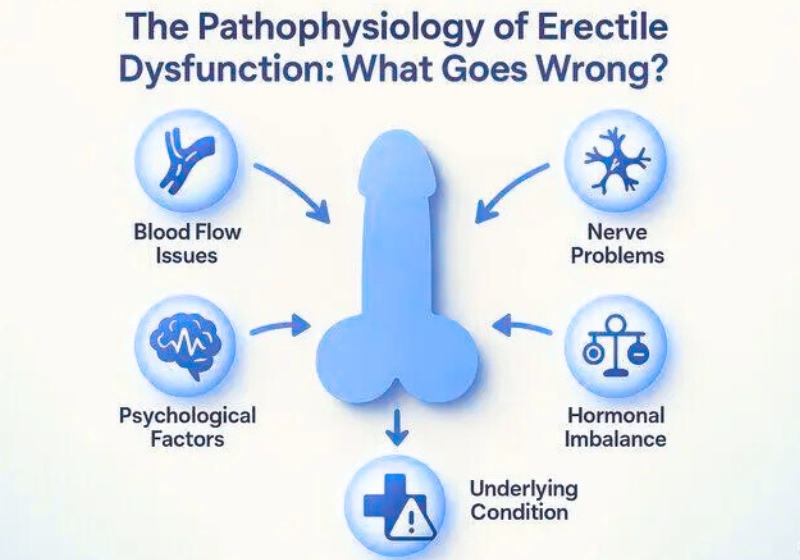
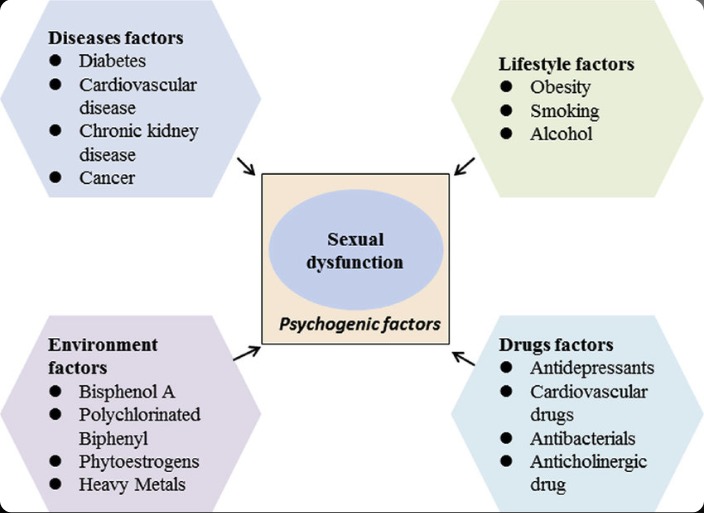
This diagram highlights common factors contributing to sexual dysfunction:
Conservative and Lifestyle Management for Mild to Moderate Disorders
Most cases improve with non-invasive approaches. Adopt a healthy lifestyle: regular exercise (especially aerobic and strength training), balanced diet, weight management, smoking cessation, and moderate alcohol intake to enhance vascular health and testosterone levels.
Pelvic floor exercises (Kegels) strengthen muscles that support erection and ejaculatory control. Practice by contracting the muscles that stop urine flow, holding briefly, then relaxing.
Medical and Advanced Treatments for Persistent Disorders
When lifestyle measures are insufficient, evidence-based options include:
- Oral medications (PDE5 inhibitors like sildenafil or tadalafil) for ED, enhancing blood flow during arousal.
- Topical anesthetics or oral SSRIs for PE to delay ejaculation.
- Hormone therapy if low testosterone is confirmed.
Non-surgical devices include vacuum erection devices (penis pumps) that create an erection by drawing blood into the penis.