- Opening Hours
- Timing: Mon to Sat - 10 AM to 5 PM
- Address: Positron Hospital, Health Center Plot Block B Suncity, Sector 35, Suncity Township-I, Rohtak, Haryana 124001
Laser Stone Removal
Laser stone removal, also known as laser lithotripsy, is a minimally invasive procedure used to treat kidney stones, ureteral stones, or bladder stones. It employs a precise laser (most commonly holmium:YAG or thulium fiber laser) to fragment stones into small pieces or dust that can pass naturally or be removed during the procedure. This technique is highly effective for stones in the ureter or kidney that do not pass on their own or are unsuitable for other methods like shock wave lithotripsy.
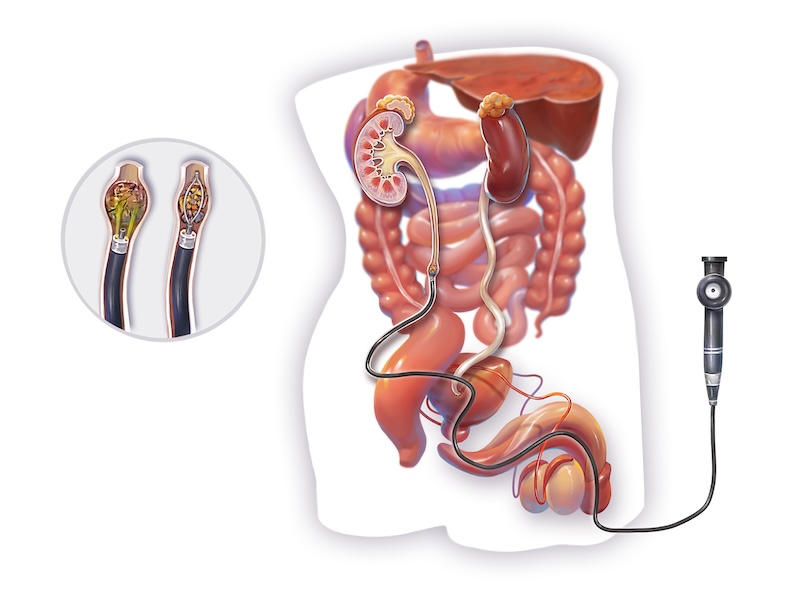
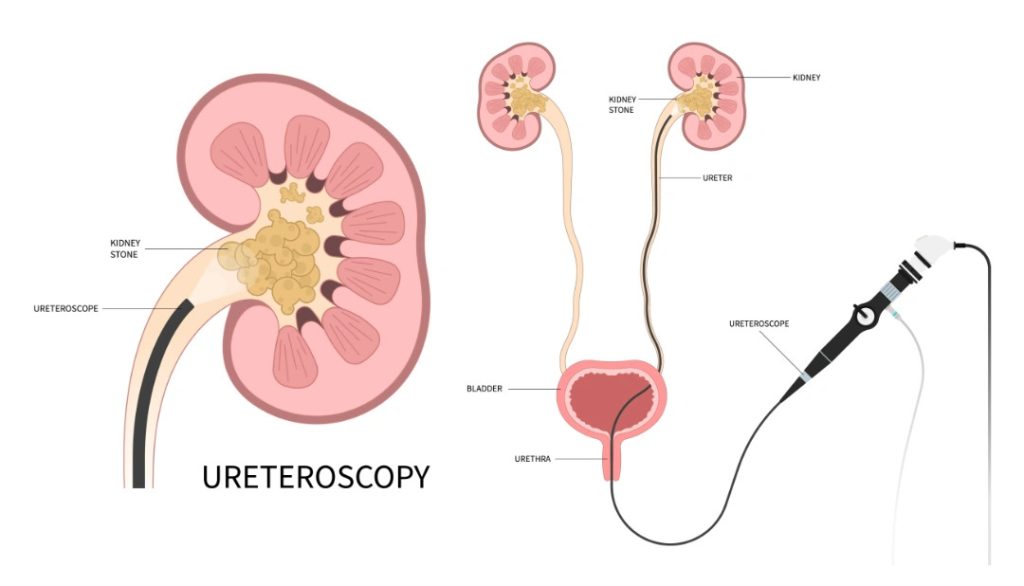
Here are illustrations of the ureteroscopy setup and the flexible scope used to access stones:
Procedure Overview and How Laser Lithotripsy Works
The procedure, called ureteroscopy with laser lithotripsy, is typically performed under general or spinal anesthesia. A thin, flexible tube called a ureteroscope is inserted through the urethra, bladder, and into the ureter or kidney. No external incisions are needed.
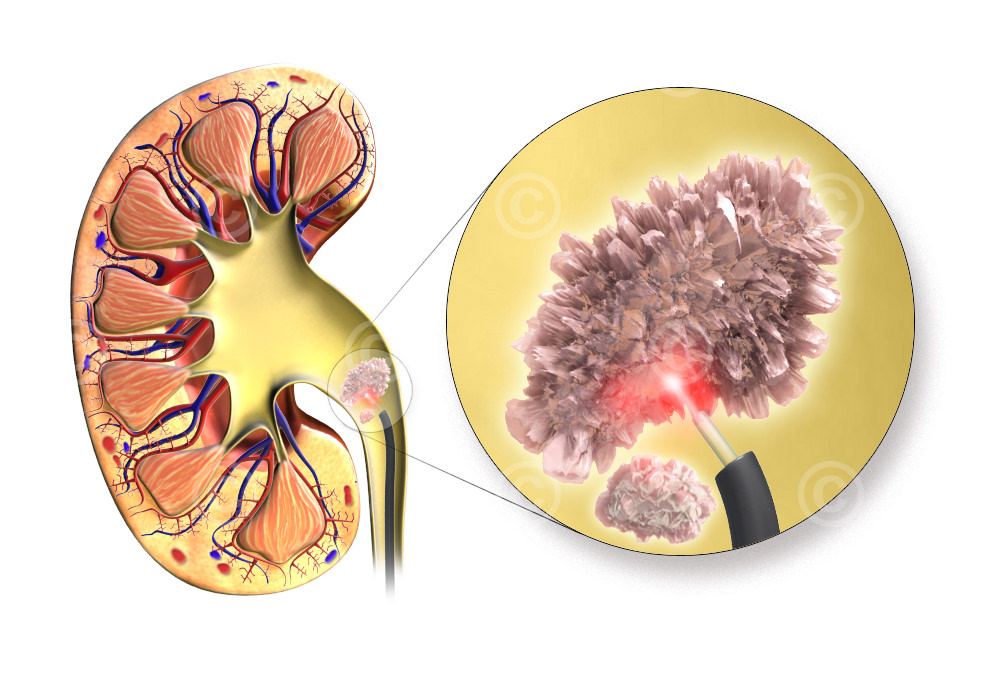
Once the stone is visualized, a fine laser fiber is passed through the scope to deliver targeted energy. The laser breaks the stone into tiny fragments or dust, which are then flushed out with saline irrigation or extracted using small baskets.
This diagram shows the laser fiber actively fragmenting a kidney stone inside the ureter:
Benefits, Recovery, and Aftercare
Laser lithotripsy offers high success rates, precise stone targeting, and suitability for various stone types and locations. It is particularly useful for hard stones or those in the lower ureter.
Recovery is generally quick: most patients go home the same day or after a short hospital stay. Mild discomfort, blood in urine, or burning during urination may occur temporarily and improve within days.
Post-procedure care includes increased fluid intake, pain management as prescribed, and follow-up imaging to confirm stone clearance. A temporary ureteral stent is often removed in the office after a few days to weeks.
This approach has become a standard treatment for many urinary stones due to its safety and effectiveness. Always consult a urologist for evaluation, as the best method depends on individual factors like stone characteristics and overall health. Prompt treatment prevents complications and restores normal urinary function!